


Price: $149.90 $129.99
(as of 2026-10-21 00:21 GMT+0000 – Details)

Platform and User Experience
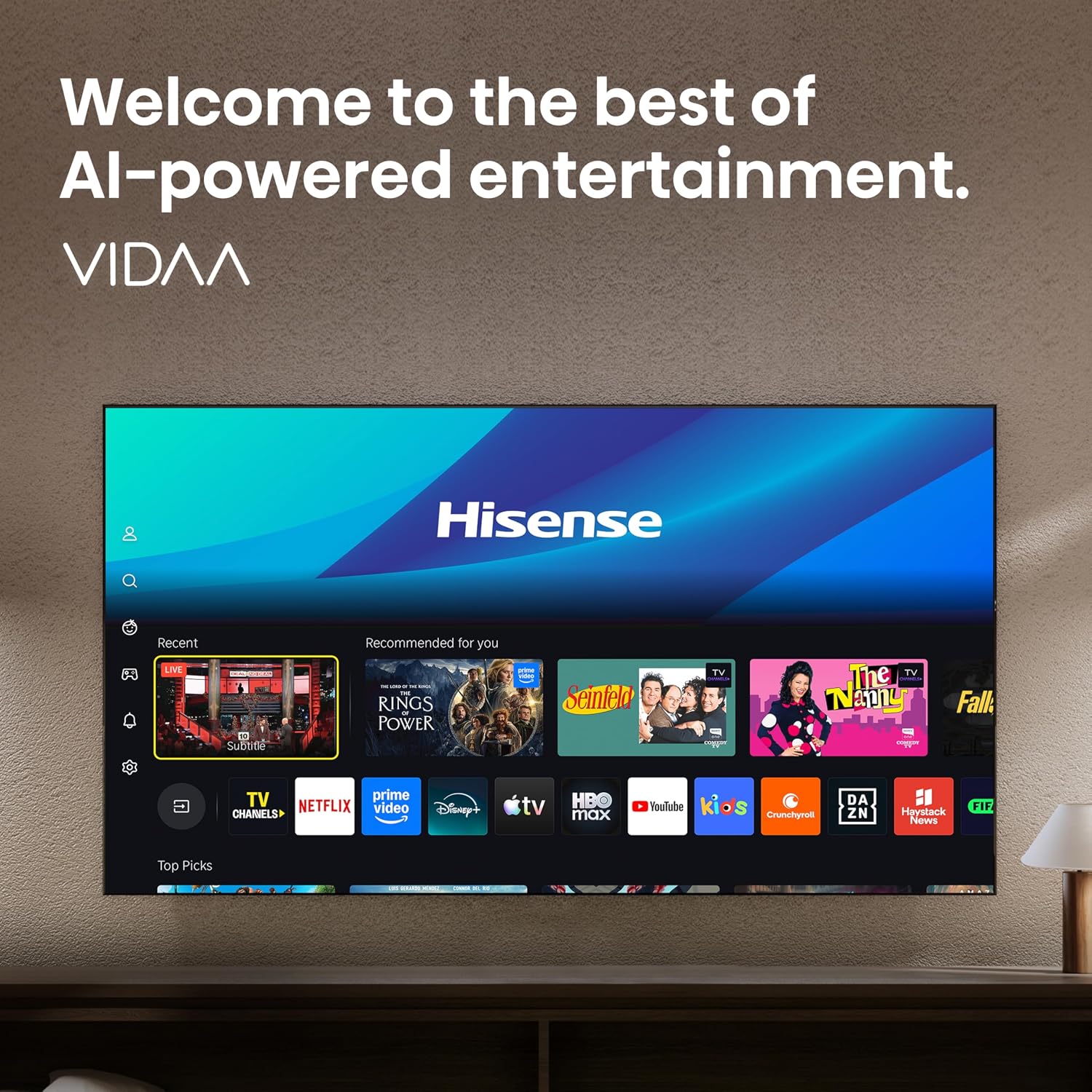
The Hisense 32″ Class QD4 Series runs on the VIDAA operating system, which is designed to deliver instant access to a wide range of streaming apps, live‑TV channels, and free content without the need for external devices. The interface uses AI‑driven personalization to surface frequently watched programs and suggest new titles, reducing the time spent navigating menus. Voice control supports 28 languages, allowing users to search for shows, adjust settings, or launch apps hands‑free while the system emphasizes on‑device processing to keep voice data private. Because the OS is built into the television, there is no additional hardware setup required, and updates are delivered over the air to keep the platform current.
Hi‑QLED Color Performance
Hi‑QLED technology combines quantum‑dot enhancement with LED backlighting to expand the color gamut and improve color accuracy across the visible spectrum. The result is that skin tones, foliage, and saturated hues appear closer to the creator’s original intent, whether the source material is a high‑budget film or a user‑generated video. The panel’s HD resolution (1366 × 768) limits the absolute pixel count, so the color benefit is most noticeable on larger‑area content such as sports fields or animated features rather than fine‑detail textures. Users should note that the color advantage does not extend to higher‑resolution sources beyond the panel’s native pixel density.
Noise Reduction for Cleaner Images
The built‑in Noise Reduction engine analyses each frame in real time, identifying and suppressing compression artifacts, sensor noise, and grain that commonly appear in low‑bitrate streams or older broadcast material. This processing is applied uniformly to both fast‑motion sequences and dimly lit scenes, helping to preserve edge definition while smoothing unwanted texture. Because the algorithm operates on the decoded video stream, it cannot reconstruct detail that was never captured; excessive reduction may soften fine patterns, so the effect is most beneficial on content that exhibits visible noise rather than on pristine high‑bitrate sources.
DTS Virtual:X Audio Rendering
DTS Virtual:X creates a virtual surround field by psychoacoustically positioning audio objects around the listener, including overhead cues, using only the TV’s built‑in speakers. This approach can make dialogue clearer and add a sense of spaciousness to movies, games, and live sports without requiring external soundbars or receiver setups. The effectiveness depends on room acoustics and speaker placement; in small or highly reflective spaces the virtualization may be less convincing. The TV does not include a dedicated subwoofer, so low‑frequency impact remains limited compared with a full home‑theater system.
Game Mode Low‑Latency Path
Game Mode reduces input‑to‑display latency to approximately 16 ms by bypassing certain post‑processing stages such as motion interpolation and heavy noise reduction. This path is intended for competitive or fast‑paced titles where frame‑by‑frame responsiveness matters. The trade‑off is a slight reduction in image polish—some smoothing and enhancement features are disabled—so the picture may appear marginally less refined than in standard viewing modes. The 16 ms figure applies to the panel’s native refresh rate; actual perceived lag can vary with the console or PC output settings and HDMI cable quality.
AI Sports Mode Enhancements
AI Sports Mode detects sport‑type content and automatically adjusts picture parameters—such as motion clarity, contrast, and color saturation—to render fast‑moving balls, players, and crowd details with reduced blur. Simultaneously, the audio pipeline boosts crowd ambience and commentator vocals, aiming to recreate a stadium atmosphere. The mode relies on content‑type metadata and heuristic analysis; it may misclassify non‑sport programming that contains similar motion patterns, leading to occasional over‑sharpening or exaggerated audio. Users can disable the mode manually if the automatic detection proves intrusive.
HDR10 and Apple Ecosystem Integration
Support for HDR10 allows the TV to decode high‑dynamic‑range streams, delivering brighter highlights, deeper shadows, and a wider contrast range than standard dynamic range signals. Because the panel’s peak brightness is modest for an HD‑class display, the HDR effect is noticeable but not as dramatic as on higher‑tier models with greater luminance capability. Apple AirPlay and HomeKit compatibility enable wireless streaming from iPhone, iPad, or Mac and allow the television to appear as a controllable accessory in the Home app, facilitating scene‑based automation without extra bridges. Both features operate over the local Wi‑Fi network and require the TV and Apple devices to be on the same subnet.